Energy Insights
Understanding Energy & the Midstream Industry
Explore quick facts, common questions, and key insights about how energy works.
Myth: Midstream is an old-economy industry with no role in a cleaner energy future.
Fact: Natural gas has been the leading source of electricity generation for more than a decade.
The same expertise, and in some cases, the same infrastructure, is now being used to deliver power directly to data centers, AI facilities, and advanced manufacturers. Midstream is a key part of how the next generation of power gets built and delivered.
Why does the U.S. export natural gas when Americans need energy too?
The U.S. is now the world's largest exporter of liquefied natural gas, shipping a record 111 million metric tons in 2025.
Europe has been the biggest beneficiary, replacing Russian pipeline gas with American supply to stabilize energy prices and reduce dependence on other sources. When Europe needed to replace its source of natural gas, American LNG (liquified natural gas) was there. Midstream builds and operates the infrastructure that made that possible, gathering raw resources from oil and gas wells, processing them into valuable products, and moving them across the country to export terminals on the coast.
Myth: Natural gas and a cleaner energy future don't go together.
Fact: They already do. Greenhouse gas emissions while natural gas production and transportation is up.
Major tech companies are partnering with midstream operators to power data centers with natural gas, delivering reliable electricity with a lower carbon footprint than coal. Midstream is already part of the backbone of the digital economy.
What does American natural gas have to do with global security?
A lot. When Russia cut off natural gas to Europe, the U.S. stepped in. Europe is now the largest buyer of American liquefied natural gas (LNG), using it to replace Russian supply and keep energy costs stable.
For countries that have experienced energy disruptions, U.S. natural gas offers a reliable alternative. Midstream is the infrastructure that makes that possible.
Myth: If you live near a pipeline, the air isn't safe.
Fact: It is safe to live, work, and breathe near a pipeline.
By design, pipelines are enclosed systems that prevent resources from interacting with the outside air. Midstream companies have made enormous progress in preventing leaks and improving operational safety. In addition, PHMSA regulates 2.6 million miles of U.S. pipelines with integrity management programs, regular assessments, and enhanced precautions in populated areas.
What does midstream have to do with electricity?
More than most people realize. Midstream has always been in the business of delivering energy where and when it is needed — more than 40% of electricity in the U.S. is generated by natural gas.
Today, that mission is expanding. The same natural gas that moves through pipelines can be converted into electricity closer to where it is actually used, powering data centers, manufacturing facilities, and AI infrastructure without waiting years for new utility grid connections to be built. Midstream operators bring decades of experience managing complex energy delivery at scale, which is exactly what this next chapter requires.
Why does powering AI require natural gas, and what does midstream have to do with it?
AI data centers use a tremendous amount of electricity, and that demand is growing.
Midstream companies are working with tech firms to develop power solutions for the data centers driving today’s digital economy. It’s a new chapter in a very established industry.
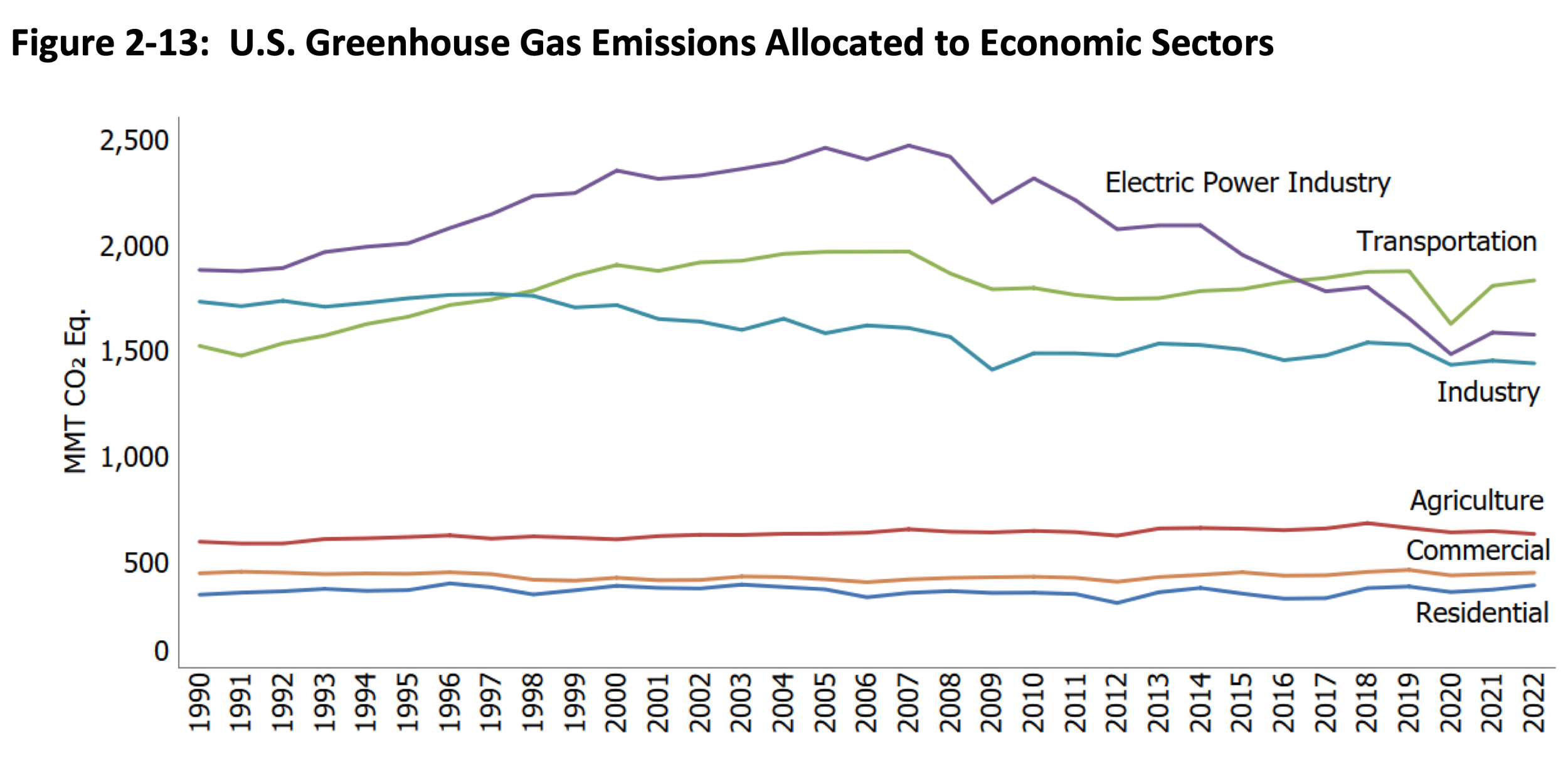
The secret behind cleaner electricity? Less coal, more natural gas.
Look at the U.S. electric power sector from 1990 to 2020 and a clear pattern emerges. As natural gas shouldered more of the generation load, total emissions from the power sector dropped significantly.
Renewables are growing too, but the coal-to-gas shift is what moved the needle. Pipelines are what made that shift possible.
Are pipelines the safest way to move energy?
Compared to truck or rail, pipelines have the lowest accident rate of any energy transport method.
PHMSA, part of the U.S. Department of Transportation, oversees pipeline safety. The result is a system that moves enormous amounts of energy quietly, efficiently, and safely every single day.
How is midstream helping fight climate change?
More ways than most people realize. In addition to implementing technologies to prevent, detect, and mitigate emissions, the industry is supporting carbon capture and hydrogen development, and adopting climate-focused practices.
Midstream companies aren’t standing on the sidelines, they’re helping deliver a cleaner energy future.
Myth: We can replace oil and gas with solar and wind.
Fact: Renewables are an important part of the energy future, but they’re not the whole picture.
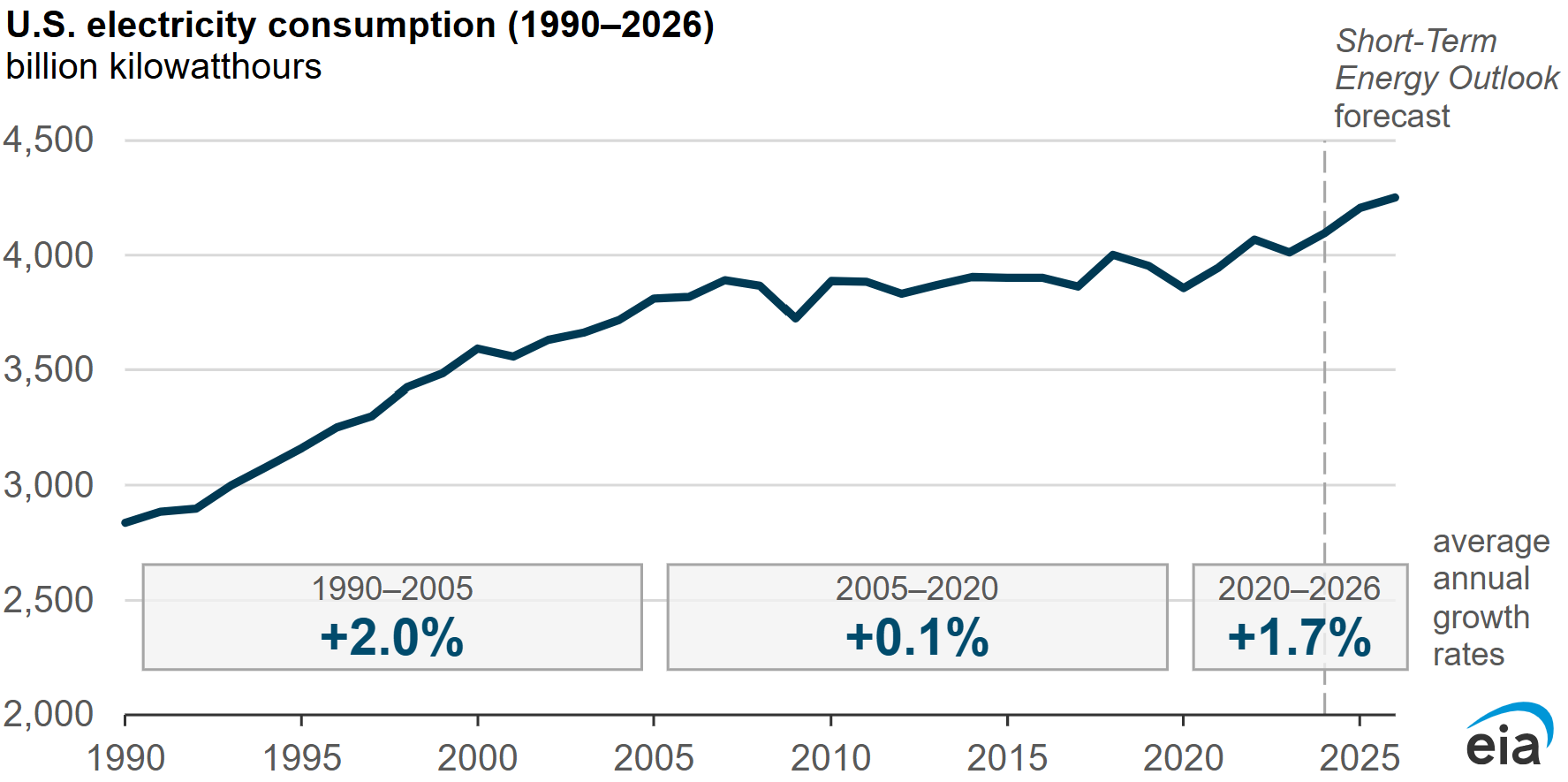
U.S. electricity demand hit a record high in 2025 and is projected to keep climbing. A reliable grid needs a mix of sources working together. Natural gas, coal, nuclear, renewables, and emerging technologies all have a role to play while we build toward a cleaner energy system. Pipelines are what keep that mix moving.
Midstream helping reduce greenhouse gas emissions.
Greenhouse gas emissions in the U.S. are down 16.7% from 2005 levels, even as the economy and population grew significantly over that same period.
The midstream industry is helping by delivering cleaner burning natural gas and working to eliminate leaks and other emissions. The industry is actively working to shrink it further through methane monitoring technology, and carbon capture investment.
Table ES-2: Recent Trends in U.S. Greenhouse Gas Emissions and Sinks (MMT CO2 Eq.)
| Gas/Source | 1990 | 2005 | 2018 | 2019 | 2020 | 2021 | 2022 | Percent Change Since 1990 | ||
|---|---|---|---|---|---|---|---|---|---|---|
| CO2 | 5,131.6 | 6,126.9 | 5,362.2 | 5,234.5 | 4,689.0 | 5,017.2 | 5,053.0 | -1.5% | ||
| CH4 (excludes LULUCF sources)a | 871.7 | 795.4 | 771.5 | 754.3 | 735.3 | 720.5 | 702.4 | -19.4% | ||
| N2O (excludes LULUCF sources)a | 408.2 | 419.2 | 439.5 | 416.4 | 391.2 | 398.2 | 389.7 | -4.5% | ||
| HFCs | 47.7 | 121.7 | 163.9 | 168.2 | 170.3 | 177.0 | 182.8 | 282.9% | ||
| PFCs | 39.5 | 10.2 | 7.4 | 7.3 | 6.6 | 6.3 | 6.7 | -83.1% | ||
| SF6 | 37.9 | 20.2 | 7.6 | 8.4 | 8.1 | 8.5 | 7.6 | -80.0% | ||
| NF3 | 0.3 | 1.0 | 0.7 | 1.1 | 1.3 | 1.1 | 1.1 | 238.3% | ||
| Total Gross Emissions (Sources)a | 6,536.9 | 7,494.6 | 6,752.7 | 6,590.1 | 6,001.8 | 6,328.8 | 6,343.2 | -3.0% | ||
| LULUCF Emissionsb | 58.0 | 68.9 | 62.8 | 58.0 | 68.4 | 72.9 | 67.6 | 16.5% | ||
| CH4 | 53.1 | 58.5 | 55.5 | 52.5 | 59.3 | 62.1 | 58.4 | 10.0% | ||
| N2O | 4.8 | 10.3 | 7.3 | 5.5 | 9.1 | 10.7 | 9.1 | 88.3% | ||
| LULUCF Carbon Stock Changec | (1,034.7) | (976.6) | (978.3) | (921.6) | (972.8) | (983.4) | (921.8) | -10.9% | ||
| LULUCF Sector Net Totald | (976.7) | (907.7) | (915.5) | (863.6) | (904.4) | (910.6) | (854.2) | -12.5% | ||
| Net Emissions (Sources and Sinks) | 5,560.2 | 6,586.9 | 5,837.3 | 5,726.6 | 5,097.4 | 5,418.2 | 5,489.0 | -1.3% |
a Gross emissions totals do not include CH4 and N2O emissions from LULUCF. LULUCF CH4 and N2O emissions are included in net emission totals.
Myth: Building pipelines means keeping fossil fuels around longer.
Fact: Fossil fuels will be a fundamental part of the energy mix for the foreseeable future.
While renewables are growing rapidly, demand is growing faster. Pipelines are the safest and most efficient way to move the resources needed to provide the reliable, affordable, and cleaner energy the world needs.
Why can't we just replace oil and gas with solar and wind right now?
Scale and speed. Renewables are growing fast, but global energy demand is growing faster.
It’s important to be clear-eyed about how we produce and use energy so we can make realistic plans that assure a safe, reliable, affordable, and cleaner energy system.
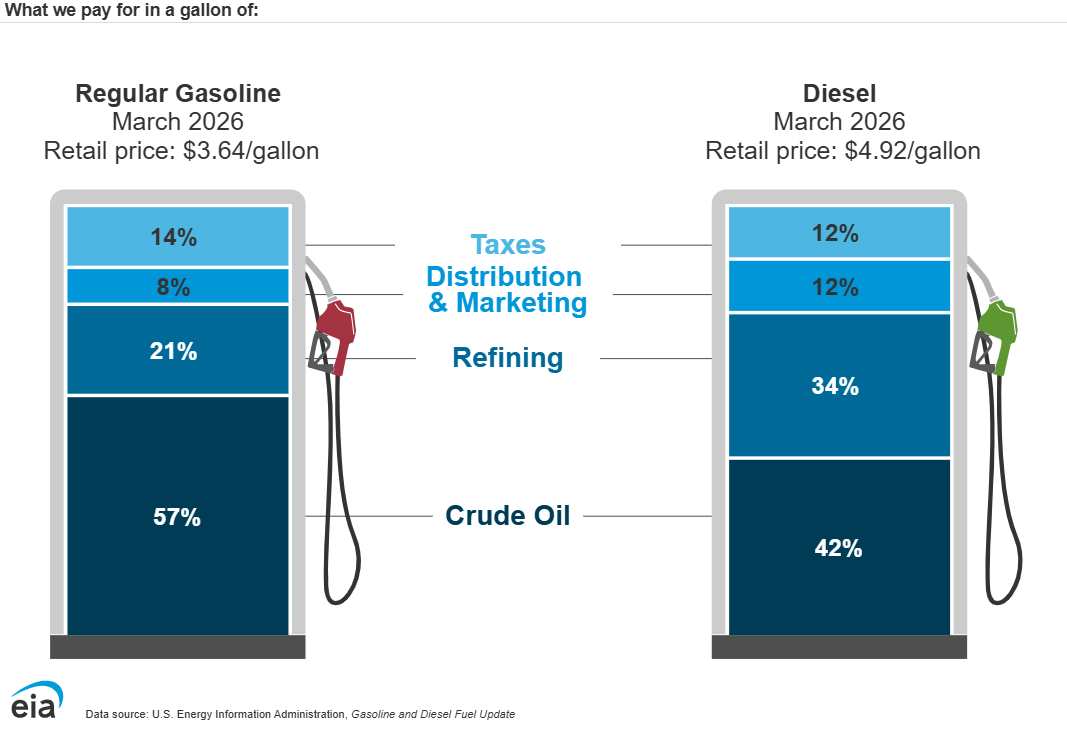
Here’s what you are actually paying for at the pump.
That price on the gas station sign is made up of four things: crude oil, refining, distribution and marketing, and taxes.
Currently, crude oil alone accounts for 52% of the price of a gallon of regular gasoline. Taxes make up 18%, refining 17%, and distribution and gas station operations 13%. So when prices spike, the biggest driver is almost always the global cost of crude.
Your data runs on natural gas (at least in part).
Every time you use your credit card, query AI, stream video, or run a search, you are drawing on power from a data center.
U.S. electricity production hit a record high in 2025 and the EIA projects it will break that record again in 2026. Data centers are driving a significant share of that growth. Renewables are expanding, but natural gas, delivered by pipelines, continues to be the leading source of electricity in the U.S. Whether it’s data centers, EVs, or your smart phone, natural gas is what’s keeping them up and running. Midstream is not just an energy story — it’s a technology story too.
Myth: Pipeline construction permanently damages the land.
Fact: Land disturbed during pipeline construction is restored as closely as possible to its original condition using modern, approved techniques. For agricultural land, restoration is required by law.
Midstream jobs pay well above the national average.
Pipeline work, for example, is skilled and specialized and it pays accordingly.
The average annual salary in pipeline transportation was more than double the national average, making these some of the best-paying jobs in the energy sector. Midstream occupations include pipeline and facility operators, measurement and analysis technicians, engineers, environmental, health and safety professionals, and an array of commercial and corporate roles. Midstream careers support families and communities across the country.
Myth: Stopping pipeline construction will speed up the energy transition.
Fact: Pipelines are a safe, reliable, efficient, environmentally responsible way to transport many kinds of fuels and products.
Pipelines are the backbone of our economy by providing the resources that we need to keep us moving and the lights on. Stopping or slowing pipeline development could affect consumers by reducing reliability and increasing costs.
What is midstream actually doing to reduce methane emissions?
Quite a lot. Midstream operators are required to monitor and report methane emissions to federal agencies, and some states have similar reporting requirements.
New tools, including satellites, drones, and ground sensors, are improving detection in real time. GPA Midstream has a dedicated technical committee focused entirely on measuring and reducing greenhouse gas emissions from midstream facilities.
Does the midstream industry care about the environment?
Yes. Midstream operators work closely with landowners, regulators, and local communities to minimize environmental impact at every stage.
The industry is pushing for greater transparency through emissions reporting, and is investing in technologies to monitor and reduce emissions. Being a good neighbor isn’t just a talking point. It’s built into how midstream operates.
