Energy Insights
Understanding Energy & the Midstream Industry
Explore quick facts, common questions, and key insights about how energy works.
Myth: Midstream is an old-economy industry with no role in a cleaner energy future.
Fact: Natural gas has been the leading source of electricity generation for more than a decade.
Midstream expertise and infrastructure is essential in delivering the power needed for everything from manufacturing to medical care to everyday products and life. In some cases, midstream is providing energy solutions directly to data centers, AI facilities and advanced manufacturers — powering the future while minimizing the impact on household utility bills.
Categories
Why does the U.S. export natural gas when Americans need energy too?
The U.S. produces more natural gas than any other country in the world. That abundance is a good thing, but producing energy and getting it where it needs to go are two different problems.
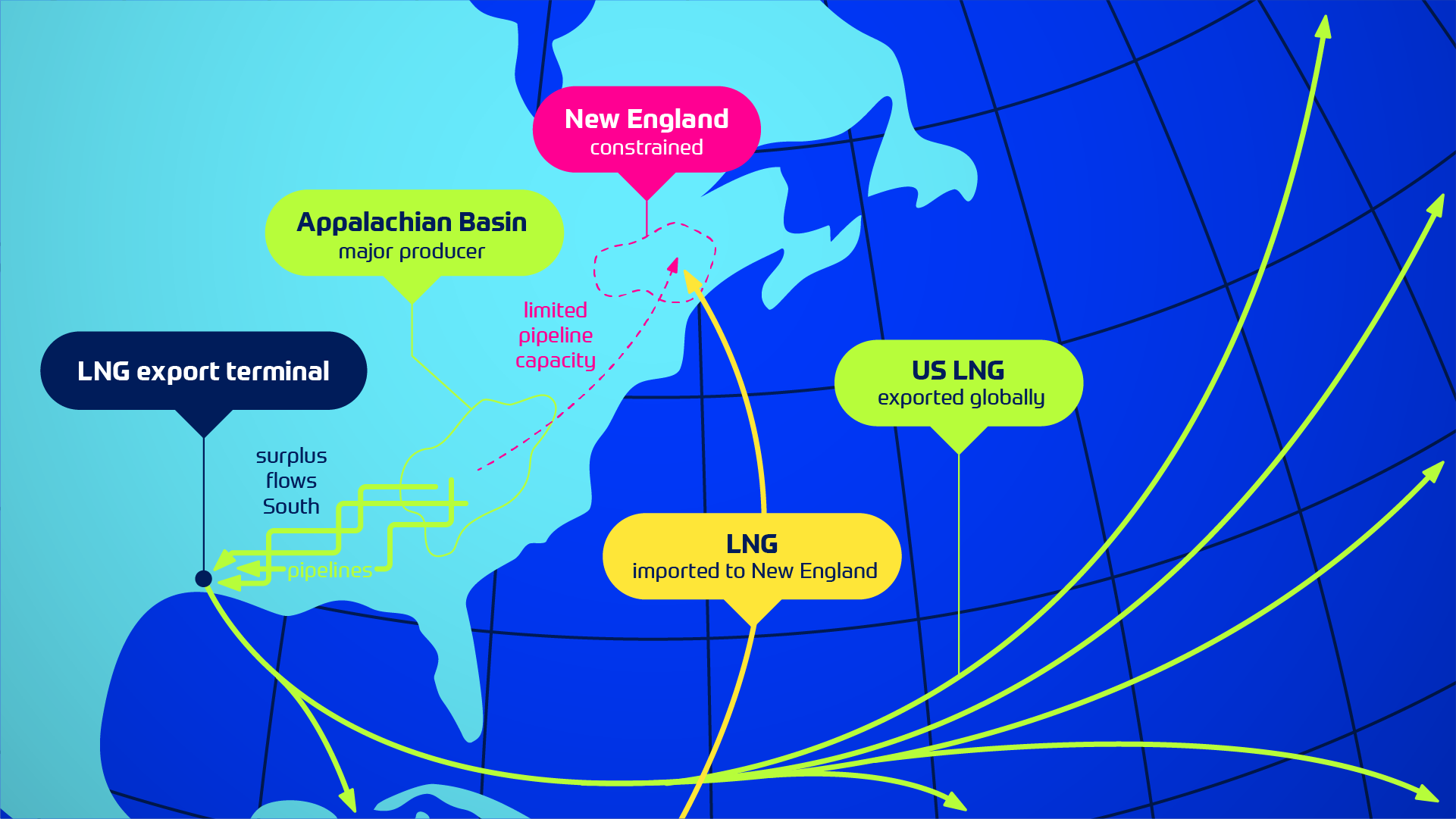
Domestic pipeline and infrastructure constraints mean that natural gas cannot reach every American market efficiently. New England is one of the clearest examples. The region neighbors one of the most productive natural gas fields in the country in Pennsylvania, Ohio, and West Virginia, yet faces some of the highest natural gas and electricity prices in the U.S.
During cold weather, New England utilities have to import liquefied natural gas from overseas because this pipeline bottleneck stops midstream companies from delivering enough domestic natural gas. The gas is available, but policy decisions made by federal and state governments over the years have prevented midstream companies from building the infrastructure needed to deliver it.
The U.S. is home to vast natural gas resources and produces more than enough to meet domestic needs and export liquefied natural gas to nations overseas.
American energy can meet domestic and global needs at the same time. Midstream infrastructure such as the pipelines, processing plants, and export terminals that move gas from wellhead to end user makes both possible. Smart infrastructure investment and development can give more Americans access to the reliable, affordable, and secure energy already being produced here.
Categories
Myth: Natural gas and a cleaner energy future don't go together.
Fact: They already do. Greenhouse gas emissions went down while natural gas production and transportation went up.
Natural gas, moved and processed by the midstream sector, is the unsung hero of America’s decarbonization success. According to data published by the Environmental Protection Agency, U.S. greenhouse gas emissions have declined since 1990 even as the nation produced more energy than ever before. That’s right — emissions dropped AND energy production climbed. That’s primarily because America replaced coal with natural gas to produce energy. The significant buildout of renewable sources like solar and wind is also part of the story, but the predominant cause of the U.S. decoupling carbon emissions from economic growth is natural gas.
Categories
What does American natural gas have to do with global security?
A lot. When Russia cut off natural gas to Europe, the U.S. stepped in. Europe is now the largest buyer of American liquefied natural gas (LNG), using it to replace Russian supply and keep energy costs stable.
For countries that have experienced energy disruptions, U.S. natural gas offers a reliable alternative. Midstream is the infrastructure that makes that possible.
Categories
Myth: If you live near a pipeline, the air isn't safe.
Fact: It is safe to live, work, and breathe near a pipeline.
By design, pipelines are enclosed systems that prevent resources from reaching the outside air. Midstream companies have made enormous progress in preventing leaks and improving operational safety. In addition, PHMSA regulates U.S. pipelines, overseeing integrity management programs, regular assessments, and enhanced precautions in populated areas.
Categories
What does midstream have to do with electricity?
Quite a lot. More than 40% of electricity in the U.S. is generated by natural gas, which is gathered, processed, stored, and transported by midstream.
Today, that mission is expanding. Electricity demand is rising, and midstream operators bring decades of experience managing complex energy delivery at scale, which is exactly what this next chapter requires.
Categories
The secret behind cleaner electricity? Less coal, more natural gas.
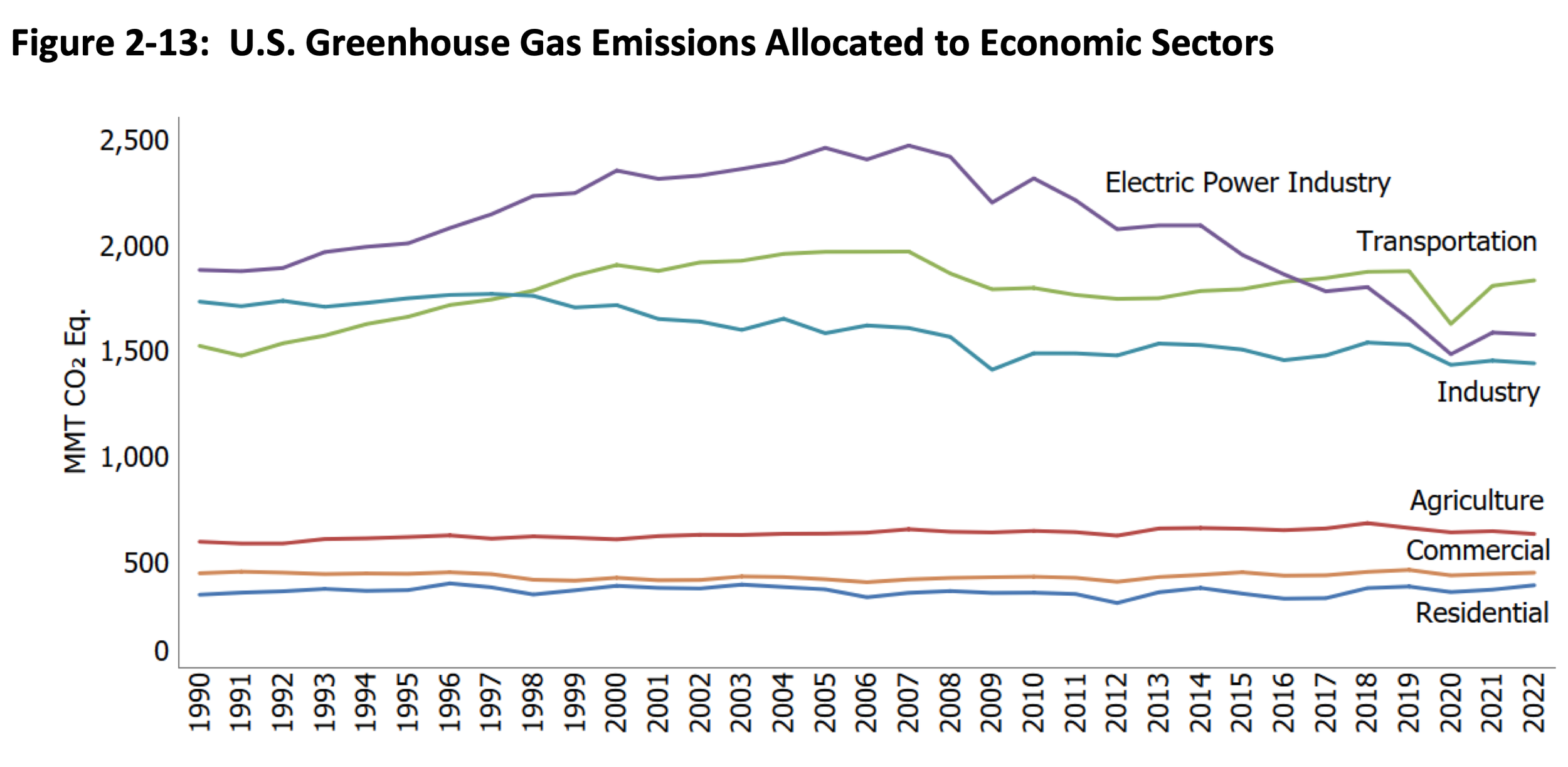
Look at the U.S. electric power sector from 1990-2022 and a clear pattern emerges. As natural gas shouldered more of the generation load, emissions from the power sector dropped.
Renewables are growing too, but the coal-to-gas shift is what moved the needle. Pipelines are what made that shift possible.
Categories
Are pipelines the safest way to move energy?
Yes. According to PHMSA, 99.999% of oil and gas products moved by pipeline safely arrive at their destination without incident.
For midstream companies, safety and efficiency are top priorities. Midstream works with the Pipeline and Hazardous Materials Safety Administration, part of the U.S. Department of Transportation, to ensure pipeline safety. The result is a system that moves enormous amounts of energy quietly, efficiently, and safely every day.
Categories
How is midstream helping fight climate change?
In addition to implementing technologies to prevent, detect, and mitigate emissions, the industry is leading carbon capture and hydrogen development, and other climate-focused practices.
Midstream companies aren’t standing on the sidelines, they’re helping deliver a cleaner energy future.
Categories
Myth: We can replace oil and gas with solar and wind.
Fact: Renewables are an important part of the energy future, but they’re not the whole picture.
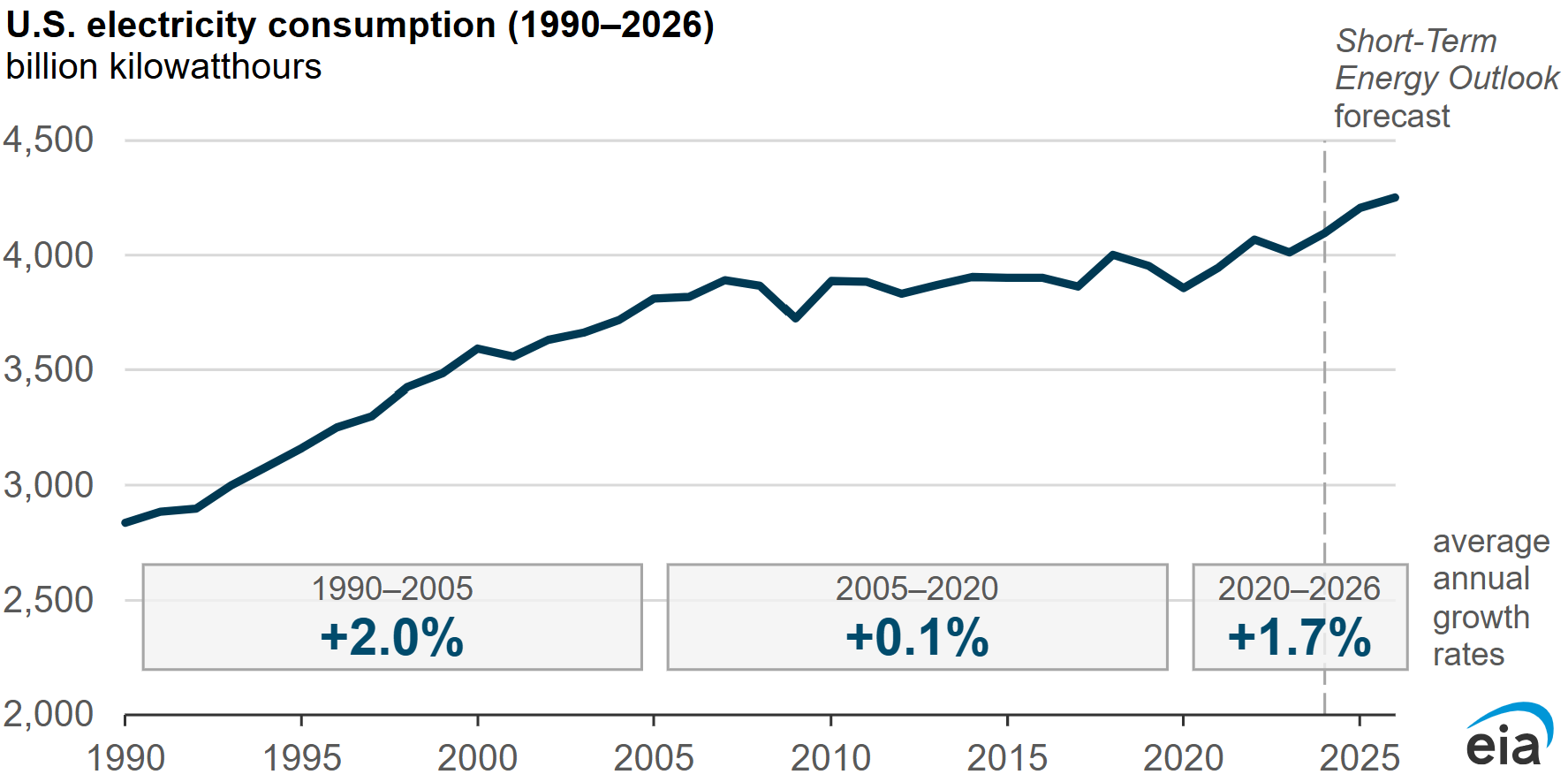
U.S. electricity demand hit a record high in 2025 and is projected to keep climbing. A reliable grid needs a mix of sources working together. Natural gas, coal, nuclear, renewables, and emerging technologies all have a role in an advanced energy system that delivers reliable, affordable, and cleaner energy. Pipelines keep that mix moving.
Categories
Midstream helps reduce greenhouse gas emissions.
Greenhouse gas emissions in the U.S. are down 16.7% from 2005 levels, even as the economy and population grew over that same period.
The midstream industry is helping by delivering cleaner burning natural gas and eliminating leaks and other emissions. The industry is engaged in a process of continuous improvement through methane monitoring technology, carbon capture investment, and ongoing research and development of innovative technologies.
Table ES-2: Recent Trends in U.S. Greenhouse Gas Emissions and Sinks (MMT CO2 Eq.)
| Gas/Source | 1990 | 2005 | 2018 | 2019 | 2020 | 2021 | 2022 | Percent Change Since 1990 | ||
|---|---|---|---|---|---|---|---|---|---|---|
| CO2 | 5,131.6 | 6,126.9 | 5,362.2 | 5,234.5 | 4,689.0 | 5,017.2 | 5,053.0 | -1.5% | ||
| CH4 (excludes LULUCF sources)a | 871.7 | 795.4 | 771.5 | 754.3 | 735.3 | 720.5 | 702.4 | -19.4% | ||
| N2O (excludes LULUCF sources)a | 408.2 | 419.2 | 439.5 | 416.4 | 391.2 | 398.2 | 389.7 | -4.5% | ||
| HFCs | 47.7 | 121.7 | 163.9 | 168.2 | 170.3 | 177.0 | 182.8 | 282.9% | ||
| PFCs | 39.5 | 10.2 | 7.4 | 7.3 | 6.6 | 6.3 | 6.7 | -83.1% | ||
| SF6 | 37.9 | 20.2 | 7.6 | 8.4 | 8.1 | 8.5 | 7.6 | -80.0% | ||
| NF3 | 0.3 | 1.0 | 0.7 | 1.1 | 1.3 | 1.1 | 1.1 | 238.3% | ||
| Total Gross Emissions (Sources)a | 6,536.9 | 7,494.6 | 6,752.7 | 6,590.1 | 6,001.8 | 6,328.8 | 6,343.2 | -3.0% | ||
| LULUCF Emissionsb | 58.0 | 68.9 | 62.8 | 58.0 | 68.4 | 72.9 | 67.6 | 16.5% | ||
| CH4 | 53.1 | 58.5 | 55.5 | 52.5 | 59.3 | 62.1 | 58.4 | 10.0% | ||
| N2O | 4.8 | 10.3 | 7.3 | 5.5 | 9.1 | 10.7 | 9.1 | 88.3% | ||
| LULUCF Carbon Stock Changec | (1,034.7) | (976.6) | (978.3) | (921.6) | (972.8) | (983.4) | (921.8) | -10.9% | ||
| LULUCF Sector Net Totald | (976.7) | (907.7) | (915.5) | (863.6) | (904.4) | (910.6) | (854.2) | -12.5% | ||
| Net Emissions (Sources and Sinks) | 5,560.2 | 6,586.9 | 5,837.3 | 5,726.6 | 5,097.4 | 5,418.2 | 5,489.0 | -1.3% |
a Gross emissions totals do not include CH4 and N2O emissions from LULUCF. LULUCF CH4 and N2O emissions are included in net emission totals.
Categories
Myth: Building pipelines means keeping fossil fuels around longer.
Fact: Fossil fuels are a fundamental part of the energy mix for the foreseeable future.
While renewables are growing rapidly, energy demand is growing faster. Pipelines are the safest and most efficient way to move the resources needed to provide the reliable, affordable, and cleaner energy the world needs.
Categories
Why can't we just replace oil and gas with solar and wind right now?
Scale and speed. Renewables are growing fast, but global energy demand is growing faster.
Making and delivering energy is a complex process. It’s important to be clear-eyed about how we produce and use energy so we can make realistic plans that assure a safe, reliable, affordable, and cleaner energy system.
Categories
Here’s what you are actually paying for at the pump.
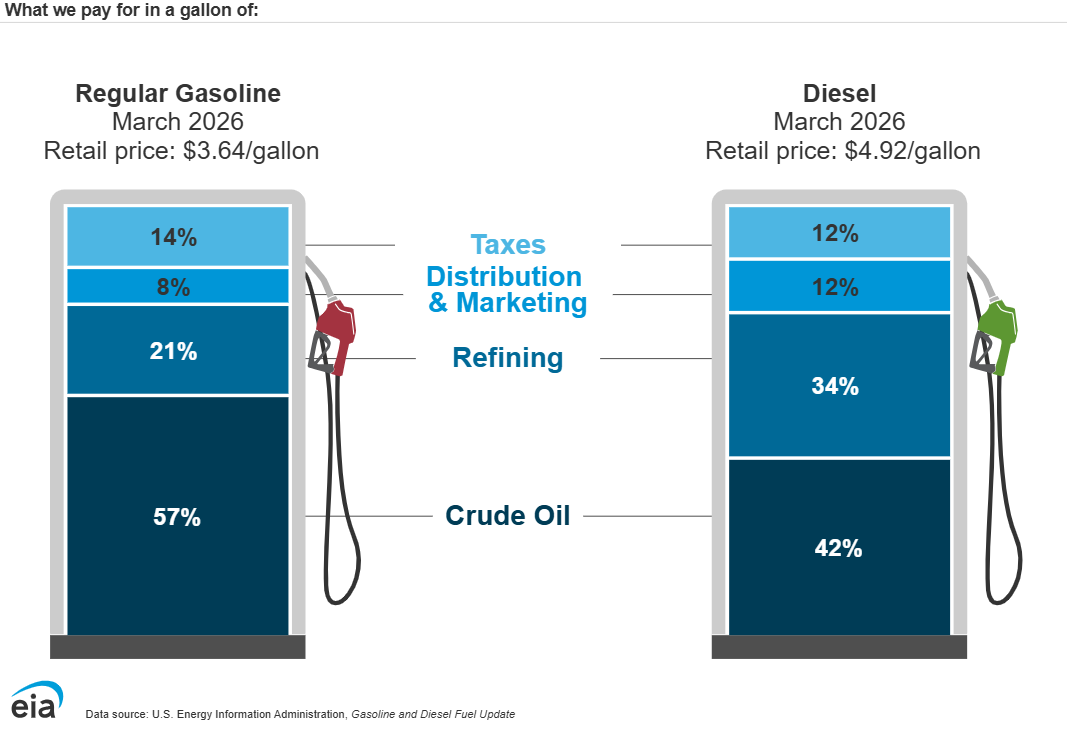
That price at the gas station is made up of four things: crude oil, refining, distribution and marketing, and taxes.
Currently, crude oil alone accounts for 52% of the price of a gallon of regular gasoline. Taxes make up 18%, refining 17%, and distribution and gas station operations 13%. So when prices spike, the biggest driver is almost always the global cost of crude.
Categories
Your data runs on natural gas (at least in part).
Every time you use your credit card, query AI, stream video, or run a search, you're supported by midstream.
U.S. electricity production hit a record high in 2025 and the EIA projects it will break that record again in 2026. Renewables are expanding, but natural gas, delivered by pipelines, continues to be the leading source of electricity in the U.S. Whether it’s data centers, EVs, or your smart phone, natural gas is what’s keeping them up and running. Midstream is not just an energy story — it’s a technology story too.
Categories
Myth: Pipeline construction permanently damages the land.
Fact: Land disturbed during pipeline construction is restored as closely as possible to its original condition using modern, approved techniques. For agricultural land, restoration is required by law.
Categories
Midstream jobs pay well above the national average.
Pipeline work, for example, is skilled and specialized and it pays accordingly.
The average annual salary in pipeline transportation was more than double the national average, making these some of the best-paying jobs in the energy sector. Midstream occupations include pipeline and facility operators, measurement and analysis technicians, engineers, environmental, health and safety professionals, and an array of commercial and corporate roles. Midstream careers support families and communities across the country.
Categories
Myth: Stopping pipeline construction will speed up the energy transition.
Fact: Pipelines are a safe, reliable, efficient, environmentally responsible way to transport many kinds of fuels and products.
Pipelines are the backbone of our economy by providing the resources that we need to keep us moving and the lights on. Stopping or slowing pipeline development could affect consumers by reducing reliability and increasing costs.
Categories
What is midstream actually doing to reduce methane emissions?
A lot. Midstream operators monitor operations, fix leaks, and invest in new technologies. They report emissions to federal and state agencies, as well as investors.
New tools, including satellites, drones, and ground sensors, are improving detection in real time. GPA Midstream has a technical committee focused entirely on measuring and reducing greenhouse gas emissions from midstream facilities.
Categories
Does the midstream industry care about the environment?
Yes. Midstream operators work closely with landowners, local communities, and regulators to minimize environmental impact at every stage.
The industry is pushing for greater transparency through emissions reporting, and is investing in technologies to monitor and reduce emissions. Being a good neighbor is built into how midstream operates.
Categories
