Energy Insights
Understanding Energy & the Midstream Industry
Explore quick facts, common questions, and key insights about how energy works.
Myth: Natural gas and a cleaner energy future don't go together.
Fact: They already do. Greenhouse gas emissions went down while natural gas production and transportation went up.
Natural gas, moved and processed by the midstream sector, is the unsung hero of America’s decarbonization success. According to data published by the Environmental Protection Agency, U.S. greenhouse gas emissions have declined since 1990 even as the nation produced more energy than ever before. That’s right — emissions dropped AND energy production climbed. That’s primarily because America replaced coal with natural gas to produce energy. The significant buildout of renewable sources like solar and wind is also part of the story, but the predominant cause of the U.S. decoupling carbon emissions from economic growth is natural gas.
Categories
Myth: If you live near a pipeline, the air isn't safe.
Fact: It is safe to live, work, and breathe near a pipeline.
By design, pipelines are enclosed systems that prevent resources from reaching the outside air. Midstream companies have made enormous progress in preventing leaks and improving operational safety. In addition, PHMSA regulates U.S. pipelines, overseeing integrity management programs, regular assessments, and enhanced precautions in populated areas.
Categories
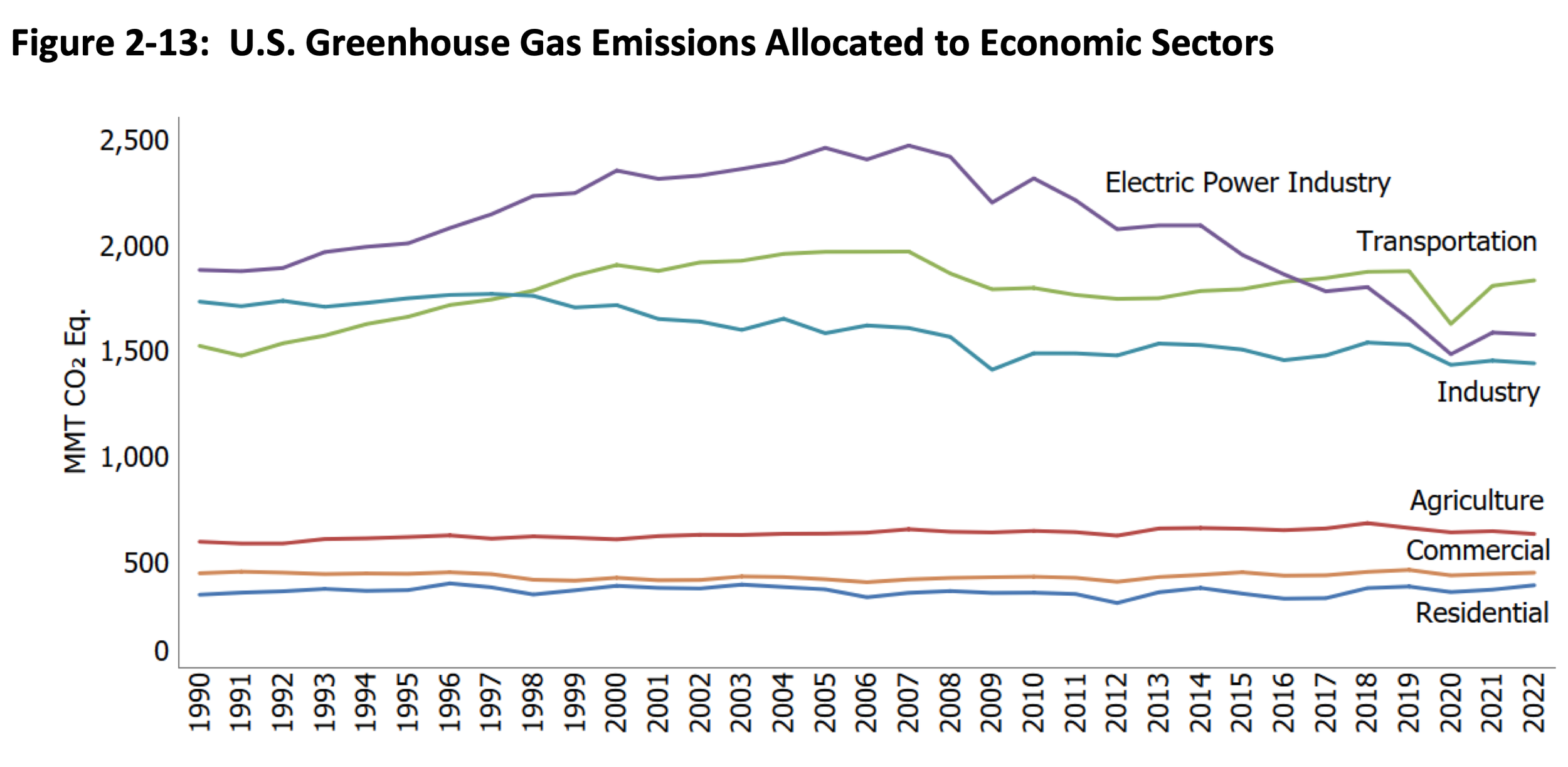
The secret behind cleaner electricity? Less coal, more natural gas.
Look at the U.S. electric power sector from 1990-2022 and a clear pattern emerges. As natural gas shouldered more of the generation load, emissions from the power sector dropped.
Renewables are growing too, but the coal-to-gas shift is what moved the needle. Pipelines are what made that shift possible.
Categories
How is midstream helping fight climate change?
In addition to implementing technologies to prevent, detect, and mitigate emissions, the industry is leading carbon capture and hydrogen development, and other climate-focused practices.
Midstream companies aren’t standing on the sidelines, they’re helping deliver a cleaner energy future.
Categories
Midstream helps reduce greenhouse gas emissions.
Greenhouse gas emissions in the U.S. are down 16.7% from 2005 levels, even as the economy and population grew over that same period.
The midstream industry is helping by delivering cleaner burning natural gas and eliminating leaks and other emissions. The industry is engaged in a process of continuous improvement through methane monitoring technology, carbon capture investment, and ongoing research and development of innovative technologies.
Table ES-2: Recent Trends in U.S. Greenhouse Gas Emissions and Sinks (MMT CO2 Eq.)
| Gas/Source | 1990 | 2005 | 2018 | 2019 | 2020 | 2021 | 2022 | Percent Change Since 1990 | ||
|---|---|---|---|---|---|---|---|---|---|---|
| CO2 | 5,131.6 | 6,126.9 | 5,362.2 | 5,234.5 | 4,689.0 | 5,017.2 | 5,053.0 | -1.5% | ||
| CH4 (excludes LULUCF sources)a | 871.7 | 795.4 | 771.5 | 754.3 | 735.3 | 720.5 | 702.4 | -19.4% | ||
| N2O (excludes LULUCF sources)a | 408.2 | 419.2 | 439.5 | 416.4 | 391.2 | 398.2 | 389.7 | -4.5% | ||
| HFCs | 47.7 | 121.7 | 163.9 | 168.2 | 170.3 | 177.0 | 182.8 | 282.9% | ||
| PFCs | 39.5 | 10.2 | 7.4 | 7.3 | 6.6 | 6.3 | 6.7 | -83.1% | ||
| SF6 | 37.9 | 20.2 | 7.6 | 8.4 | 8.1 | 8.5 | 7.6 | -80.0% | ||
| NF3 | 0.3 | 1.0 | 0.7 | 1.1 | 1.3 | 1.1 | 1.1 | 238.3% | ||
| Total Gross Emissions (Sources)a | 6,536.9 | 7,494.6 | 6,752.7 | 6,590.1 | 6,001.8 | 6,328.8 | 6,343.2 | -3.0% | ||
| LULUCF Emissionsb | 58.0 | 68.9 | 62.8 | 58.0 | 68.4 | 72.9 | 67.6 | 16.5% | ||
| CH4 | 53.1 | 58.5 | 55.5 | 52.5 | 59.3 | 62.1 | 58.4 | 10.0% | ||
| N2O | 4.8 | 10.3 | 7.3 | 5.5 | 9.1 | 10.7 | 9.1 | 88.3% | ||
| LULUCF Carbon Stock Changec | (1,034.7) | (976.6) | (978.3) | (921.6) | (972.8) | (983.4) | (921.8) | -10.9% | ||
| LULUCF Sector Net Totald | (976.7) | (907.7) | (915.5) | (863.6) | (904.4) | (910.6) | (854.2) | -12.5% | ||
| Net Emissions (Sources and Sinks) | 5,560.2 | 6,586.9 | 5,837.3 | 5,726.6 | 5,097.4 | 5,418.2 | 5,489.0 | -1.3% |
a Gross emissions totals do not include CH4 and N2O emissions from LULUCF. LULUCF CH4 and N2O emissions are included in net emission totals.
Categories
What is midstream actually doing to reduce methane emissions?
A lot. Midstream operators monitor operations, fix leaks, and invest in new technologies. They report emissions to federal and state agencies, as well as investors.
New tools, including satellites, drones, and ground sensors, are improving detection in real time. GPA Midstream has a technical committee focused entirely on measuring and reducing greenhouse gas emissions from midstream facilities.
Categories
Does the midstream industry care about the environment?
Yes. Midstream operators work closely with landowners, local communities, and regulators to minimize environmental impact at every stage.
The industry is pushing for greater transparency through emissions reporting, and is investing in technologies to monitor and reduce emissions. Being a good neighbor is built into how midstream operates.
Categories
